
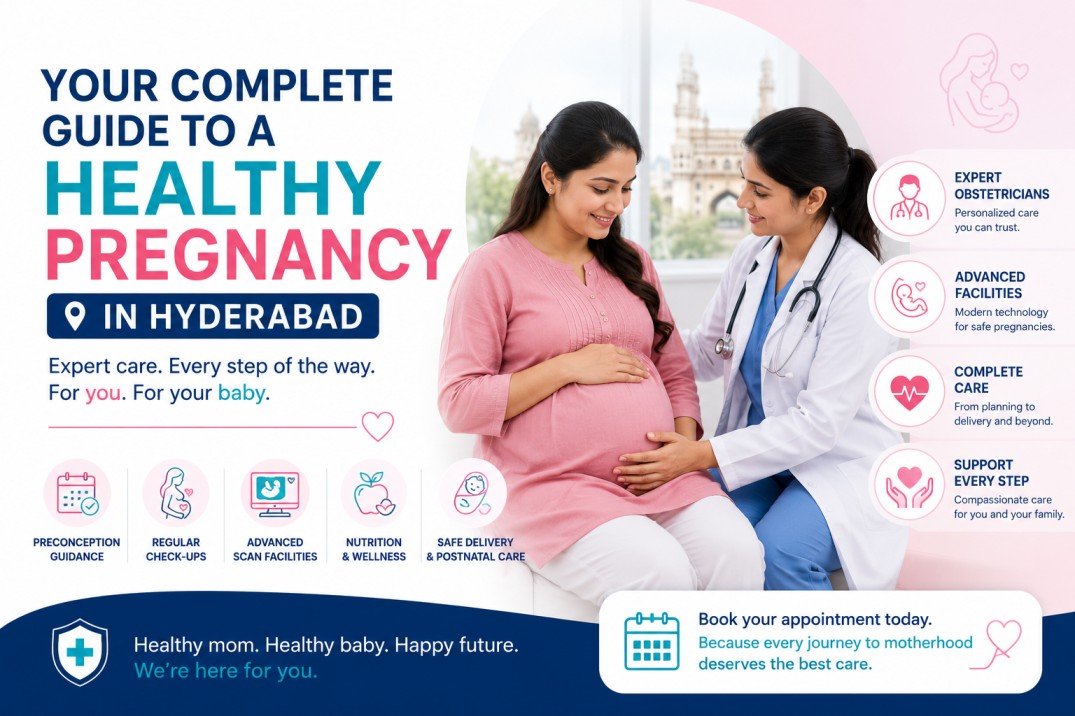
Pregnancy is one of the most exciting and transformative experiences in a woman’s life. The right medical support, nutrition and knowledge make a profound difference to both mother and baby. This guide walks you through the key stages of pregnancy and what to expect at each step.
First Trimester (Weeks 1–12): Laying the Foundation
The first trimester is when all of the baby’s major organs begin to form. It is also when most women experience morning sickness, fatigue and breast tenderness. Key actions:
- Book your first antenatal appointment between 6 and 10 weeks
- Begin folic acid supplementation (400–800 mcg daily)
- Avoid alcohol, smoking and over-the-counter medications without medical advice
- Get your first ultrasound scan (dating scan) done between 8 and 12 weeks
- Have baseline blood tests — blood group, haemoglobin, thyroid, blood sugar, infection screening
Second Trimester (Weeks 13–26): The Comfort Zone
For most women, the second trimester brings relief from early pregnancy symptoms. Energy returns and foetal movements begin around 18–20 weeks. Key milestones:
- Anomaly ultrasound scan between 18 and 20 weeks
- Glucose tolerance test between 24 and 28 weeks
- Iron and calcium supplementation as recommended
- Gentle exercise — walking or prenatal yoga with doctor's approval
- Antenatal visits every 4 weeks
Third Trimester (Weeks 27–40): Preparing for Arrival
The final trimester involves rapid foetal growth and preparation for birth. Visits become more frequent. Important steps:
- Antenatal visits every 2 weeks until 36 weeks, then weekly
- Growth scan and Doppler study to assess baby's wellbeing
- Discuss your birth plan with your doctor
- Pack your hospital bag from week 36 onwards
- Monitor foetal movements daily — report any significant reduction immediately
Nutrition During Pregnancy
- Iron-rich foods: leafy greens, legumes, red meat (well cooked), fortified cereals
- Calcium sources: dairy, ragi, sesame seeds, tofu
- Protein: eggs, paneer, pulses, lean meats and fish (cooked thoroughly)
- Stay hydrated — aim for 8–10 glasses of water daily
- Avoid raw or undercooked foods, unpasteurised milk and papaya
Danger Signs — Seek Help Immediately
- Heavy vaginal bleeding at any stage
- Severe abdominal pain or cramping
- Sudden swelling of face, hands or feet (possible pre-eclampsia)
- Persistent headache with blurred vision
- Reduced or absent foetal movements after week 28
- Fever above 38°C
Book a Consultation
Our Gynaecology & Obstetrics team in Medchal offers complete antenatal care, high-risk pregnancy management and 24×7 labour and delivery services with NICU support. Register your pregnancy today.
📞 +91 73374 49300